
Baking bacon in the oven takes just 10–20 minutes and gives you crispy, evenly cooked slices every time. This method is easy, mess-free, and perfect for cooking bacon in large batches.
A few Saturdays ago, I ended up hosting an unplanned breakfast for more people than expected. My kids had invited a friend over, and that friend’s dad dropped by to pick him up but stayed for coffee. One chair turned into four, and suddenly my kitchen felt like a small café. I didn’t mind—it’s the kind of chaos I secretly enjoy after a long week at work.
The only problem was bacon. Cooking it on the stovetop for a crowd has never been my favorite. Grease popping, uneven slices, and me standing there flipping piece after piece while everyone else relaxed. That morning, I decided I wasn’t doing that again.
I pulled out two baking sheets, lined them quickly, and laid the bacon out flat. No crowding, no rushing. Then I slid everything into the oven and finally had a moment to breathe. I poured coffee, chatted with our guest, and even helped my youngest set the table.
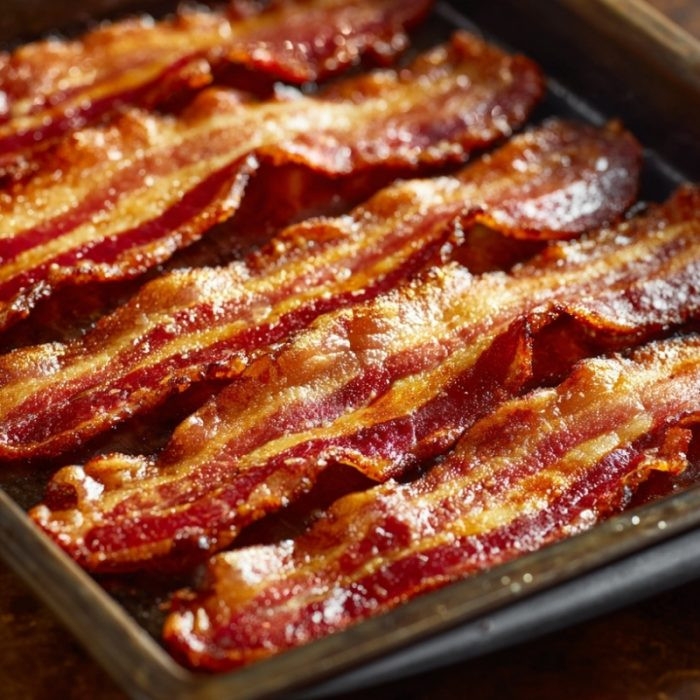
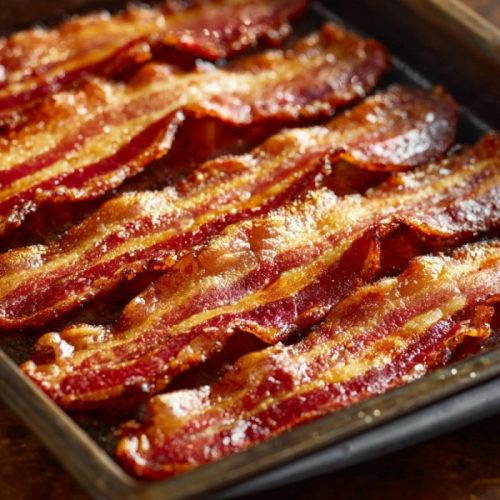
When I checked back, the bacon looked evenly browned, crisp at the edges, and not a single slice curled up like it usually does in a pan. That moment felt like a small win in a busy house. Since then, this oven method has quietly replaced every other way I cook bacon.
Short Description
Oven-baked bacon is the easiest way to bake bacon in the oven, giving you crispy, evenly cooked slices without stovetop mess. It’s perfect for family breakfasts or weekly meal prep.
Key Ingredients for Baking Bacon in Oven
-
12–16 slices bacon (regular or thick-cut)
Tools Needed
- Rimmed baking sheet
- Parchment paper or aluminum foil
- Tongs
- Paper towels
- Oven
How To Bake Crispy Bacon in Oven (Step-by-Step Guide)
Step 1: Preheat the Oven for Baking Bacon
Preheat the oven to 400°F (204°C). For thinner bacon, you can lower it slightly to 375°F, but 400°F gives a crisp finish in less time. Starting with a fully heated oven helps the bacon cook evenly from the beginning.
Step 2: Prepare the Baking Sheet for Bacon
Line a rimmed baking sheet with parchment paper or aluminum foil. This prevents sticking and makes cleanup much easier. The rim is important—it keeps hot grease from spilling over, which can be dangerous.
Step 3: Arrange Bacon for Even Cooking
Lay the bacon slices in a single layer on the prepared sheet. The slices can sit close together, but they should not overlap. Overlapping causes steaming instead of crisping. If needed, use a second sheet for larger batches.
Step 4: Bake Bacon Until Crispy
Place the tray on the middle rack and bake for 10–20 minutes. Start checking at the 10-minute mark. Thin slices cook faster, around 10–15 minutes, while thick-cut bacon may need closer to 20 minutes. The bacon should turn deep golden brown and look crisp.
Step 5: Drain and Rest
Use tongs to transfer the bacon to a plate lined with paper towels. Let it sit for 1–2 minutes. It will firm up slightly as it cools, giving you that perfect crisp texture.
Why Baking Bacon in the Oven Works So Well
Even Crispiness
The oven cooks each slice evenly, so no more half-burnt, half-soft pieces.
Hands-Off Cooking
No flipping or standing over a hot pan. You get time back while it cooks.
Less Mess
Grease stays contained on the baking sheet, not all over your stovetop.
Perfect for Batches
You can cook a full tray at once, making it ideal for families or meal prep.
Flexible Texture
You can easily adjust the cooking time for chewy or extra crispy bacon.
Expert Tips for Perfect Oven-Baked Bacon
These small adjustments make a big difference in texture and consistency.
Watch the last few minutes: Bacon can go from perfect to overdone quickly after minute 12.
Use parchment, not wax paper: Wax paper can melt; parchment handles heat safely.
Rotate the pan if needed: If your oven has hot spots, turn the tray halfway through.
Check for doneness visually: Look for deep golden color and slightly firm edges.
Avoid overcrowding: Too many slices lead to uneven cooking and soft spots.
Adjust for thickness: Thick-cut needs more time; don’t rush it.
Let it rest before serving: It crisps up more after leaving the oven.
Save the grease carefully: Let it cool before storing if you plan to reuse it.
Serving Ideas for Oven-Baked Bacon
Bacon pairs well with both simple and creative meals.
Classic
- Eggs and toast
- Pancakes or waffles
- Breakfast sandwiches
Savory
- Crumbled over salads
- Added to burgers
- Mixed into pasta
Healthy
- Alongside avocado slices
- With scrambled eggs and spinach
- Wrapped around asparagus
Comfort Food
- In grilled cheese
- With baked potatoes
- On mac and cheese
Gourmet
- Bacon-wrapped dates
- On flatbreads with arugula
- Paired with soft cheeses
Nutrition Information
Approximate values per serving (2 slices); results vary by brand and thickness.
| Nutrient | Amount |
|---|---|
| Calories | 90 |
| Carbohydrates | 0 g |
| Fiber | 0 g |
| Sugars | 0 g |
| Protein | 6 g |
| Fat | 7 g |
| Sodium | 350 mg |
| Vitamin B12 | Small amount |
Bacon provides protein and energy, but it’s best enjoyed in moderation as part of a balanced meal.
Health Considerations When Eating Bacon
This dish can fit into a balanced lifestyle when paired thoughtfully.
Protein from bacon: Supports muscle maintenance and energy levels
B vitamins: Help with metabolism and daily energy use
Fat content: Provides satiety, helping you feel full longer
Iron: Supports oxygen transport in the body
Sodium awareness: Encourages mindful portion control
Pairing flexibility: Works well with vegetables and whole grains for balance
Balanced meals using bacon can still support a thoughtful, health-conscious routine.
Baking Bacon in Oven vs Other Cooking Methods
Choosing the right method affects texture, cleanup, and time.
| Method | Texture | Flavor | Health Impact | Convenience |
|---|---|---|---|---|
| Oven | Even, crispy | Rich, clean | Less splatter | Hands-off |
| Stovetop | Uneven | Slightly smoky | More grease mess | Needs attention |
| Microwave | Thin, brittle | Mild | Less fat retained | Very quick |
| Air Fryer | Crispy edges | Strong | Moderate | Small batches |
The oven stands out for even cooking, minimal effort, and easy cleanup.
Common Mistakes When Baking Bacon in Oven (And Fixes)
Overlapping the Bacon
This causes steaming instead of crisping.
Solution: Always keep slices in a single layer with slight spacing.
Skipping the Lined Pan
Bare pans make cleanup difficult and can cause sticking.
Solution: Use parchment or foil every time.
Using Too High Heat
Excess heat burns edges before the center cooks.
Solution: Stick to 375–400°F for balanced results.
Not Watching the Final Minutes
Bacon cooks quickly at the end.
Solution: Check frequently after the 10-minute mark.
Using a Flat Sheet Without Edges
Grease can spill and create a safety hazard.
Solution: Always use a rimmed baking sheet.
Serving and Pairing Suggestions
Serve bacon as a side or build it into meals:
Breakfast platters with eggs, toast, and fruit
Added to sandwiches or wraps
Crumbled over soups or salads
Serving styles
Family-style on a platter
Layered in breakfast boards
Prepped in batches for the week
Drink pairings
Coffee
Fresh juice
Light smoothies
Storage and Reheating Tips
Refrigerator
Store cooked bacon in an airtight container for up to 4 days.
Freezer
Freeze in layers separated by parchment paper for up to 2 months.
Reheating in Oven
Warm at 350°F for 5–7 minutes until heated through.
Microwave Reheating
Heat for 20–30 seconds between paper towels to keep it from getting soggy.
FAQs
1. Can I cook bacon without lining the pan?
Yes, but cleanup will take longer and the bacon may stick.
2. Why is my bacon not crispy?
It may be overcrowded or not cooked long enough.
3. Can I use thick-cut bacon?
Yes, just increase the cooking time slightly.
4. Do I need to flip the bacon?
No, the oven cooks both sides evenly.
5. Can I save the bacon grease?
Yes, let it cool completely and store it in a sealed container.
6. How long to bake bacon in the oven?
Bake bacon at 400°F for 10–20 minutes depending on thickness.
7. What temperature is best for baking bacon?
400°F is ideal for crispy, evenly cooked bacon without burning.
Quick Tips for Better Oven-Baked Bacon
Use two trays for large batches instead of overcrowding one
Try a light sprinkle of black pepper before baking
Bake on the middle rack for even heat distribution
Let bacon rest before serving for better texture
Recipe Variations
1. Sweet Maple Bacon
Brush bacon lightly with 1–2 tablespoons maple syrup before baking. Cook as usual until caramelized.
2. Spicy Pepper Bacon
Sprinkle ½ teaspoon chili flakes over the slices before baking for a mild heat.
3. Brown Sugar Glazed
Add a thin layer of brown sugar on top before baking. Watch closely to prevent burning.
4. Herb-Infused Bacon
Sprinkle dried thyme or rosemary before baking for a subtle savory twist.
Final Thoughts
That busy Saturday breakfast turned into one of those small kitchen lessons that sticks. Not everything needs extra effort to turn out well. Sometimes the simplest approach gives the best results, especially when life outside the kitchen feels full.
Cooking bacon this way has made mornings calmer in our house. I don’t rush between the stove and the table anymore. Instead, I get a few quiet minutes while the oven does its job. That alone feels worth it.
The kids don’t notice the method, but they notice the result. Plates come back empty, and that says enough. Even my husband, who usually prefers things done the “old way,” admitted this version tastes better.
It’s one of those small changes that quietly improves everyday cooking. And in a home like mine, those changes matter more than anything fancy.
The Best Way To Bake Bacon At Home
Ingredients
- 12–16 slices bacon regular or thick-cut
Instructions
- Preheat the oven to 400°F (204°C). For thinner bacon, reduce slightly to 375°F, but 400°F gives a crisp finish more quickly and helps it cook evenly.
- Line a rimmed baking sheet with parchment paper or aluminum foil. This prevents sticking and keeps cleanup simple while also catching the grease safely.
- Arrange the bacon slices in a single layer on the sheet. Keep them close but not overlapping, or they will steam instead of crisp. Use a second tray if needed.
- Place the tray on the middle rack and bake for 10–20 minutes. Check after 10 minutes. Thin slices usually take 10–15 minutes, while thick-cut may need up to 20. The bacon should look deep golden and crisp.
- Transfer the bacon to a plate lined with paper towels using tongs. Let it rest for 1–2 minutes so it firms up and finishes crisping before serving.