

That Saturday afternoon at the community center was busier than usual. I had just wrapped up a morning shift and stopped by a neighborhood bake sale where parents were raising funds for a school trip. The tables were packed with brownies, cookies, and colorful cupcakes, but one tray caught my attention right away.
It looked simple, lightly dusted with powdered sugar, and had a soft, delicate appearance that stood apart. One of the moms, Lan, mentioned it was a lemon custard cake she learned from her aunt. I didn’t manage to get a slice before it disappeared, but the image of it stayed with me long after I left.
That evening, my kitchen turned into a small testing ground. My youngest stood nearby asking if it would taste like lemon candy, while my older one hoped for something airy like sponge cake.
My husband kept stopping by, curious about how things were coming together. I moved between bowls and ingredients, trying to balance a new idea with familiar steps. It didn’t seem complicated, but the thought of creating two textures in one cake kept me paying close attention.
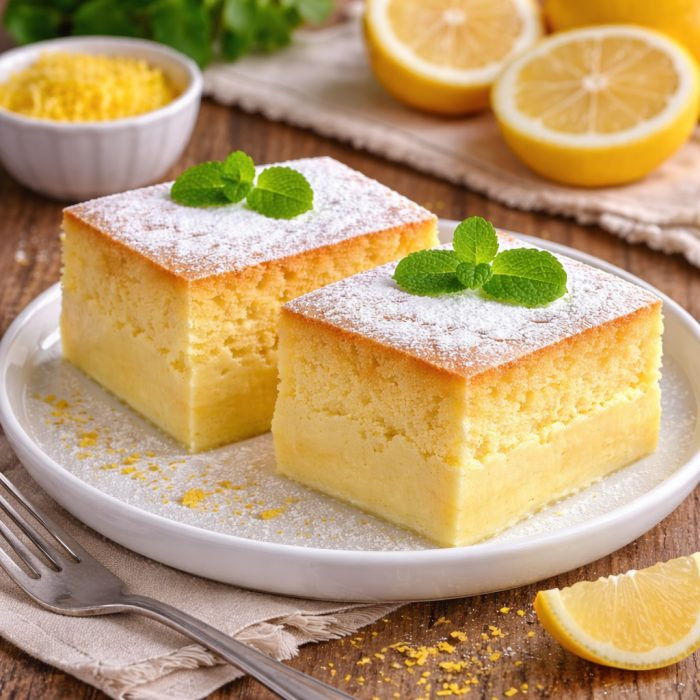
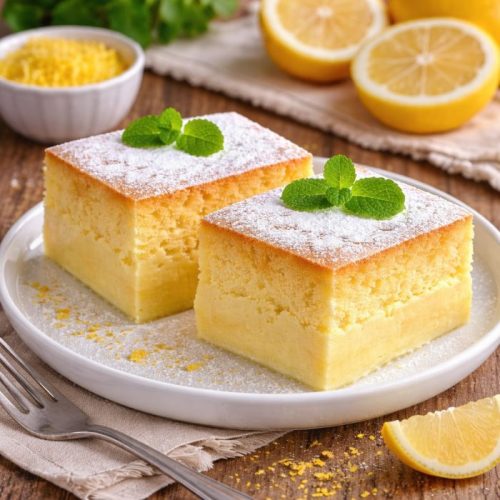
When it came out of the oven, the top had a gentle golden color and the center moved slightly when I nudged the pan. As it cooled on the counter, a fresh citrus aroma filled the room, light and inviting. Cutting into it revealed soft layers, airy on top and creamy underneath. That moment at the table, with everyone reaching for another piece, told me this was a recipe worth keeping close.
Short Description
Lemon Custard Cake is a soft, airy lemon cake that bakes into delicate layers with a light sponge top and creamy custard base, finished with a dusting of powdered sugar.
Key Ingredients
- 4 eggs, room temperature, separated
- ¾ cup sugar
- ½ cup unsalted butter, melted and slightly cooled
- 1 teaspoon vanilla extract
- ¾ cup all-purpose flour
- ¼ cup freshly squeezed lemon juice
- Zest from 2 large lemons
- 1¾ cups milk, lukewarm
- Powdered sugar for dusting
Tools Needed
- Mixing bowls
- Electric mixer or hand whisk
- Spatula
- 8×8-inch baking dish
- Parchment paper
- Oven
Cooking Instructions
Step 1: Prepare the oven and pan
Preheat oven to 325°F. Line an 8×8-inch baking dish with parchment paper, leaving some overhang for easy removal. Lightly grease with cooking spray.
Step 2: Whip the egg whites
In a clean bowl, beat the egg whites until stiff peaks form. The peaks should stand upright when you lift the whisk. Set aside.
Step 3: Mix egg yolks and sugar
In another bowl, beat the egg yolks with sugar until the mixture turns pale yellow and slightly thickened.
Step 4: Add butter and vanilla
Pour in the melted butter and vanilla extract. Mix until smooth and evenly combined.
Step 5: Incorporate flour
Add the flour and mix gently until no dry spots remain. Avoid overmixing to keep the texture light.
Step 6: Add lemon flavor
Stir in the lemon juice and zest. The batter will start to smell fresh and slightly tangy.
Step 7: Add milk gradually
Slowly pour in the lukewarm milk while mixing. The batter will become thin, almost like pancake batter. This is expected.
Step 8: Fold in egg whites
Gently whisk in the egg whites by hand. Do not fully blend them in. Small lumps are important because they help create the layered texture.
Step 9: Pour and bake
Pour the batter into the prepared pan. Bake for 40 to 60 minutes. Start checking at 35 minutes. The top should feel firm, while the center remains slightly jiggly.
Step 10: Prevent over-browning
If the top browns too quickly, loosely cover with foil. Avoid baking too long, as this can dry out the custard layer.
Step 11: Cool completely
Let the cake cool fully in the pan before removing. Dust with powdered sugar before serving.
Why You’ll Love This Recipe
Creates two textures in one bake, soft cake and creamy custard
Uses simple pantry ingredients
Light and refreshing flavor, not overly sweet
Works well as a dessert after a heavy meal
Budget-friendly and easy to prepare
Mistakes to Avoid & Solutions
Overmixing the batter
Mixing too much can flatten the texture.
Solution: Stir gently and stop once combined.
Fully incorporating egg whites
Blending completely removes the layered effect.
Solution: Leave small lumps when mixing.
Using cold ingredients
Cold eggs and milk affect texture.
Solution: Use room temperature eggs and lukewarm milk.
Overbaking the cake
Too much time in the oven dries the custard layer.
Solution: Remove when the center still has a slight jiggle.
Skipping parchment paper
Cake may stick and break apart.
Solution: Line the pan with overhang for easy lifting.
Serving and Pairing Suggestions
Serve chilled or at room temperature for best texture
Pair with fresh berries like strawberries or blueberries
Add a light dollop of whipped cream
Slice into squares for easy serving at gatherings
Works well as an afternoon treat with tea
Storage and Reheating Tips
Store in the refrigerator for up to 3 days in an airtight container
Keep covered to prevent drying
Do not freeze, as texture may change
Serve cold or let sit at room temperature for 10 minutes before eating
Avoid microwaving to maintain custard consistency
FAQs
1. Why is my batter so thin?
That’s normal. The thin batter helps create the custard layer during baking.
2. Can I use bottled lemon juice?
Fresh lemon juice is recommended for better flavor.
3. How do I know when it’s done?
The top should be set and lightly golden, with a slightly jiggly center.
4. Can I double the recipe?
Yes, use a larger pan and adjust baking time slightly longer.
5. Why didn’t my cake separate into layers?
The egg whites may have been mixed too thoroughly. Keep some lumps next time.
Tips & Tricks
Zest lemons before juicing for easier handling
Use a fine grater for smooth zest texture
Let the cake cool completely to allow layers to set
Slice with a clean, sharp knife for neat edges
Recipe Variations
Orange Custard Cake
Replace lemon juice with ¼ cup fresh orange juice and use orange zest. Follow the same steps. The flavor becomes sweeter and less tangy.
Berry Lemon Version
Add ½ cup fresh blueberries to the batter before baking. Do not stir too much. The berries add bursts of sweetness.
Coconut Twist
Replace ½ cup milk with coconut milk. This adds a light tropical note without overpowering the lemon.
Low Sugar Option
Reduce sugar to ½ cup. The cake will be less sweet but still balanced with the citrus flavor.
Final Thoughts
This Lemon Custard Cake has a quiet way of fitting into everyday life, especially on days when you want something homemade without a complicated process. It brings a light, fresh flavor to the table and offers a texture that feels a little special without needing extra effort. Even after a long day, it’s the kind of dessert that feels manageable to prepare.
I keep this recipe close because it works for both busy evenings and slow weekends. It uses simple ingredients, comes together with basic steps, and still delivers something that feels thoughtful. Sharing slices of this cake around the table always turns an ordinary moment into something a bit more memorable.
Light Lemon Custard Cake
Ingredients
- 4 eggs room temperature, separated
- ¾ cup sugar
- ½ cup unsalted butter melted and slightly cooled
- 1 teaspoon vanilla extract
- ¾ cup all-purpose flour
- ¼ cup freshly squeezed lemon juice
- Zest from 2 large lemons
- 1¾ cups milk lukewarm
- Powdered sugar for dusting
Instructions
- Preheat oven to 325°F. Line an 8×8-inch pan with parchment and lightly grease.
- Beat egg whites until stiff peaks form. Set aside.
- Beat egg yolks with sugar until pale and slightly thick.
- Add melted butter and vanilla. Mix until smooth.
- Add flour and mix gently until just combined.
- Stir in lemon juice and zest.
- Slowly add lukewarm milk while mixing until smooth and thin.
- Gently whisk in egg whites, leaving small lumps.
- Pour batter into pan and bake 40 to 60 minutes, check at 35 minutes.
- Cover with foil if top browns too quickly. Avoid overbaking.
- Cool completely, then dust with powdered sugar before serving.